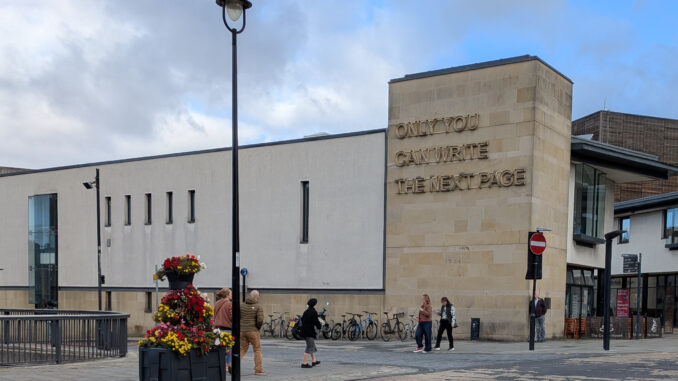
We do not want to give the impression that everything in Durham is bad, so this month we are highlighting an example of good practice near Clayport on the centre of the city. Here the slip road from the A690 comes up to meet Claypath. A ramp leads onto an area paved with bricks which is neither obviously pavement nor obviously road.
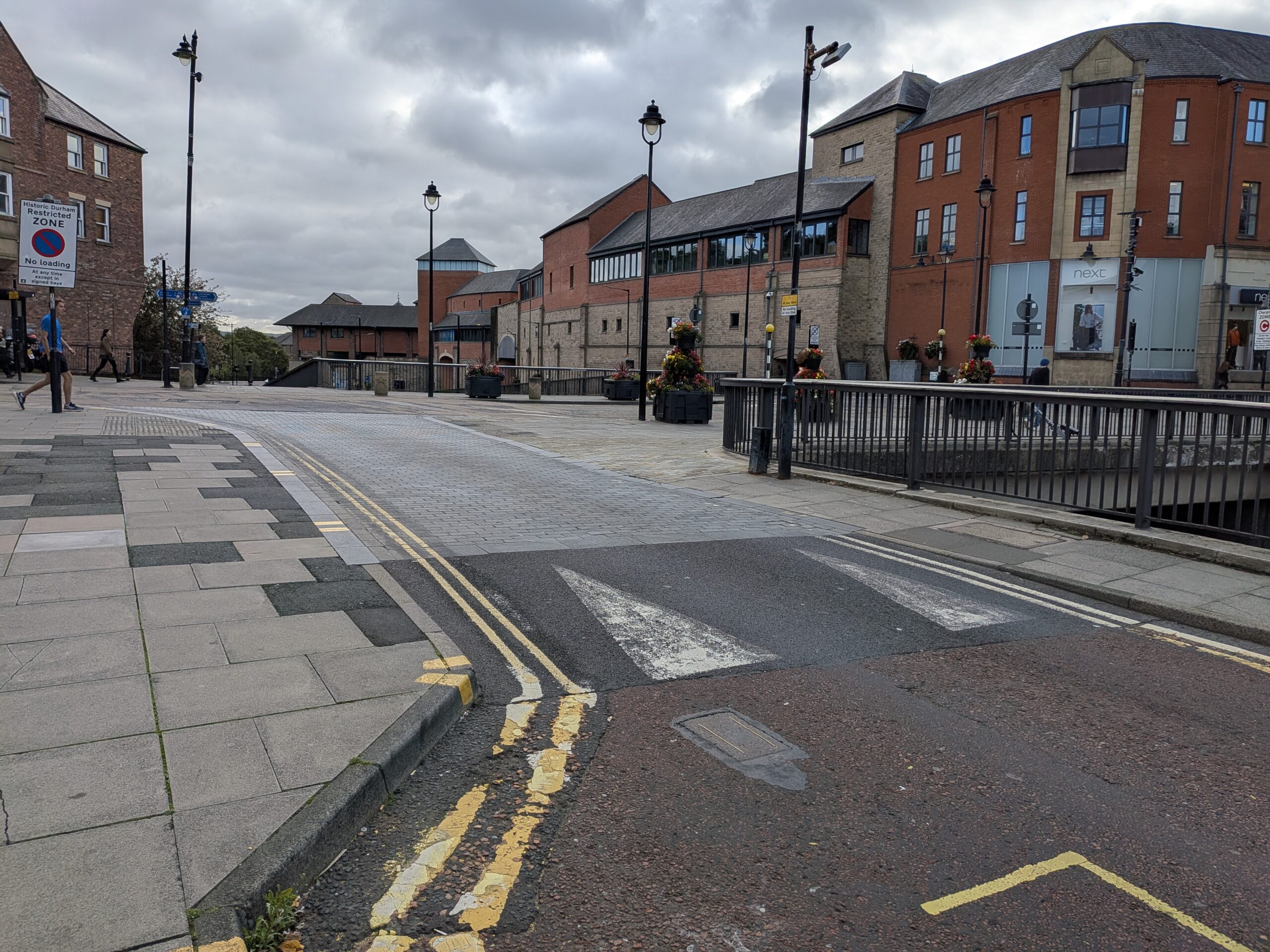
The raised table forces cars to slow down, which makes pedestrians safer. Rule H2 of the Highway Code states that at a junction you should give way to pedestrians crossing or waiting to cross a road into which or from which you are turning. With the footway remaining level, pedestrians are given more confidence that they have the right of way.
Watching for a few minutes, the feature does seem to work as intended: most drivers approach cautiously and let pedestrians cross first.
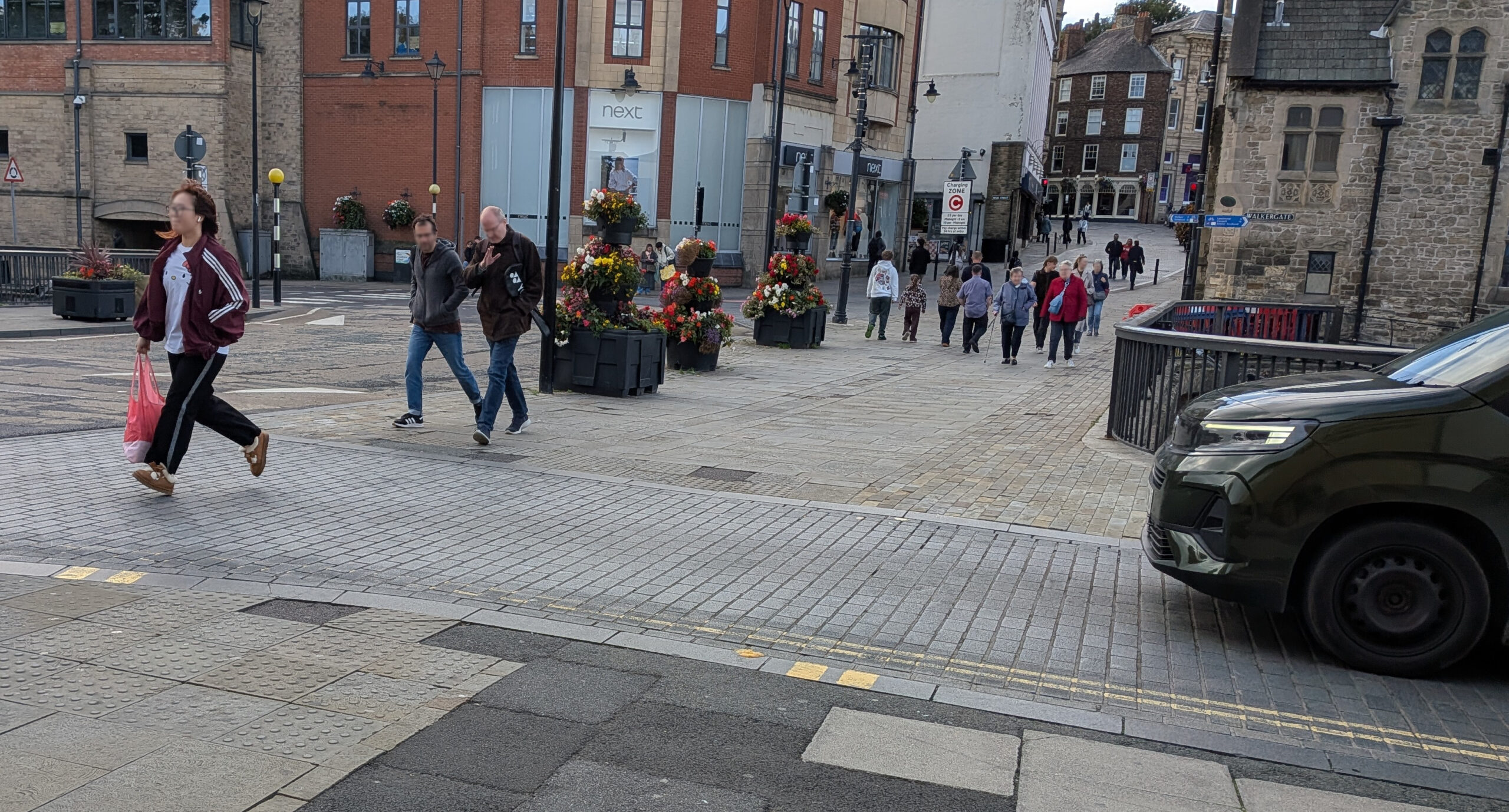
This facility has been in place at least 2009. We are starting to see side road crossings in some cities where the surface of the footway is continuous across the side road, further reinforcing the idea that pedestrians have priority. These designs are termed “informal crossings” because the lack of formal markings (such as zebra stripes) leaves the situation open to interpretation.
Can you think of other places in Durham where side road treatments like this would be useful?
Leave a Reply